Light bulbs? Why talk about Light bulbs?
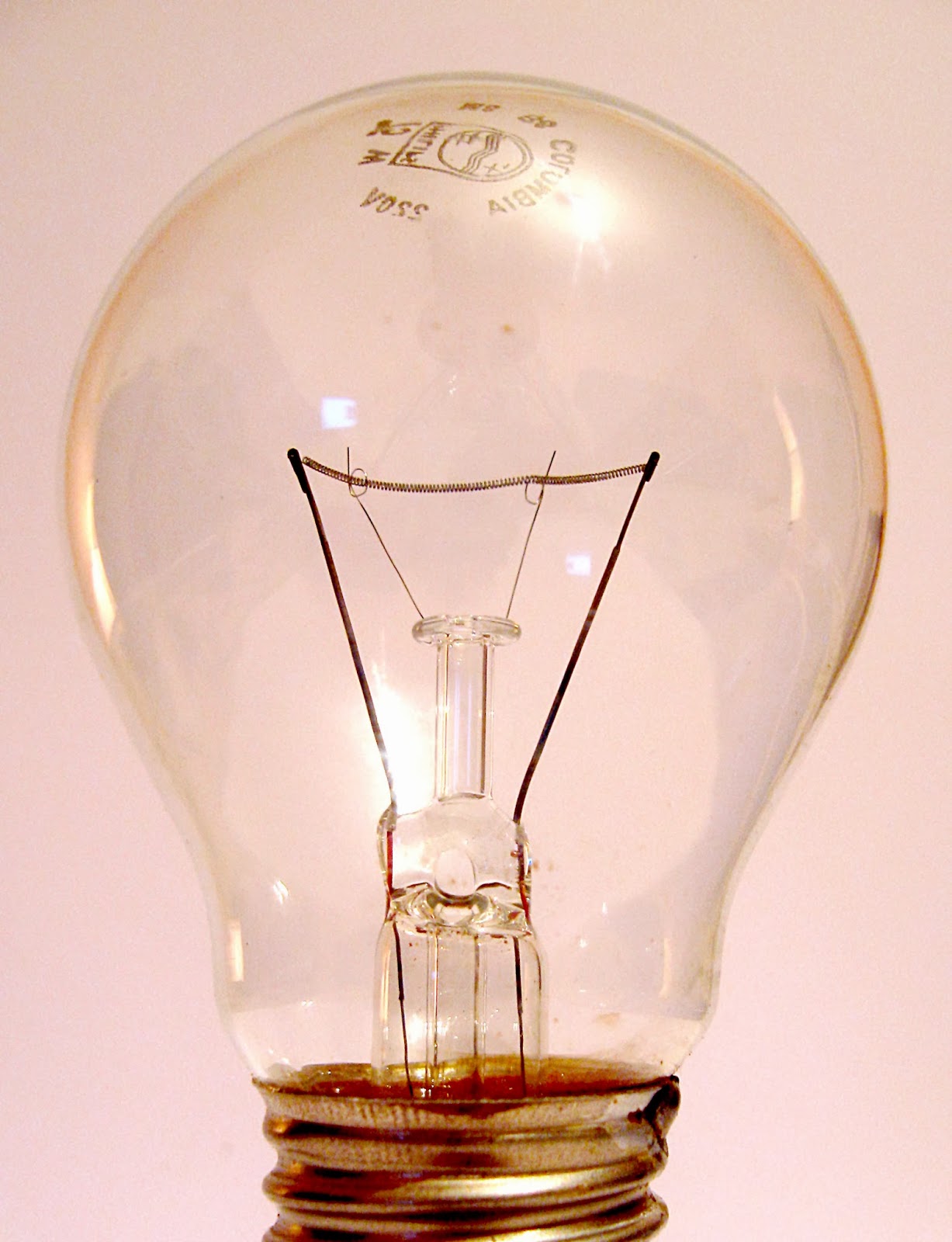
It used to be, not so long ago, that buying a lightbulb was a very simple process. Go to the store, find the right size bulb, and purchase. All the lights were incandescent bulbs, (the ones with filament), and they lasted a while, and then burned out and you got new ones.
|
|
|
Light bulbs used to be simple. This old style incandescent is cheap to make but wastes a lot of energy as heat. |
Then things got complicated.
First on the scene were Compact Fluorescent Lights. It took a while for the prices to come down, but when they did I experimented (as many people did) with all types of them. I tried them in lamps, and then I tried them in recessed lights, in bathrooms, etc. All different bulbs in all different places. Incandescent bulbs burn out all the time, so in a couple of years, many of the light bulbs in my house had been replaced. CFL's promised longer life than incandescent bulbs, and solid energy savings - often 30-40% less than their old-style counterparts. They were also more expensive though - where an old bulb was 50 cents to 1.50 based on size and style, the CFL were $3-6. The math worked - as long as you got the life out of the bulb.
But there were these problems....
The first problem was that you can't use most (all?) CFLs on dimmer switches. That will ruin the bulb, meaning you'll get a couple of months out of a bulb that is supposed to last years. And strangely, many of the CFLs that I bought did not last their full life span - often less than half. Most CFLs also had "cool light" which is light with a bluish tint, not the warm, red tinted light of the old
|
|
|
CFL's are funny looking, but they did save some $$ |
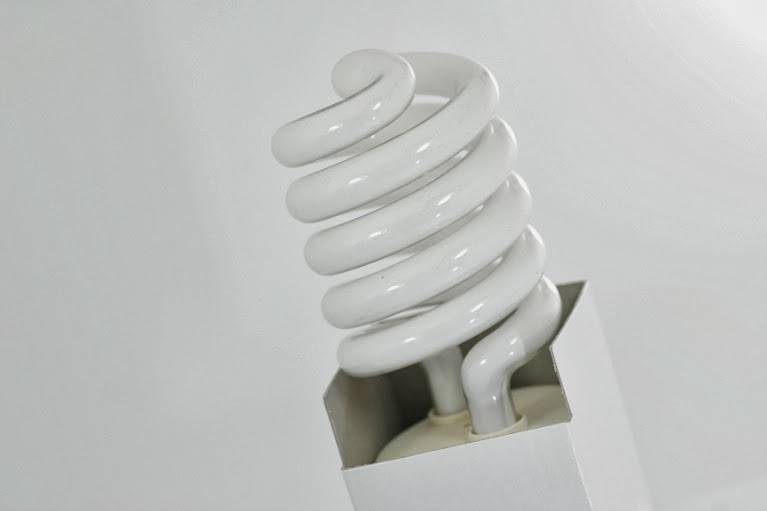
style light bulbs. Cool light is unflattering to us pale humans. And, perhaps most disconcerting, they had mercury in the bulbs. The Mercury means the that the bulbs had to be disposed of seperately - you can't just put them in the trash - but I'm sure millions of people do just that. That means that the mercury in these bulbs gets burned up or buried - less than ideal for the environment, which of course was a big part of the reason one bought these bulbs in the first place.
Clearly, that's pretty frustrating. Guess what though? Technology moves on, and there was a technology promised to make all the problems go away - and revolutionize the common lightbulb. LED light bulbs.
What are LED lightbulbs for my house?
LED are light bulbs that actually take a microchip of sorts that turns electricity to light. LED are so good at this, in fact, they they are almost 80% more efficient than the old style incandescents. EIGHTY PERCENT. To put this in context, about 13% of all electricity in the US is for lighting. We could reduce that to less than 3% with the use of LEDs.
But that is not the best part. The best part is these LED lightbulbs also last 500% longer than CFL's, or 1500% longer than old style lightbulbs. An average LED lightbulb will last for 17 years if used a 8 hours a
|
|
|
Each LED you buy may be the last one you need for that light fixture. |

day. 17 Years! And they work on dimmers. AND they don't use the harsh color tones of CFLs.
It truly is a miracle technology. The only problem was cost. These bulbs were crazy expensive. Like $30-45. I'm all for the environment, but that was crazy money for a lightbulb.
Guess what? Prices are coming down. I just bought my first LED light for $7.98 at Lowe's. It was on sale, but $10 LED's are coming, and you should keep an eye out for them. Here are some rough numbers for you as to how the three types of bulbs stack up. (Lightbulbs have different sizes and energy usage depends on how often they are on, so these are just approximations based on a light bulb for a recessed light.
|
Purchase Cost (over 17 years) |
Energy cost (over 17 years) |
Total Lifetime Cost |
|
|
Old-Style Incandescents |
$40 (20 bulbs, 2000 hrs each) |
119 |
$159 |
|
CFL's |
$20 (5 bulbs, 8000 hrs each) |
68 |
$88 |
|
LED |
$10 (one bulb, 40,000+ hrs each) |
57 |
$67 |
This chart reflects data available for 75W equivlanent interior floodlight bulbs
When to purchase LED lights
Well, as you can see from the chart, if you find LED's at $10 a piece or less, now would be a good time. Each bulb will save you $100 over a 17 year span (to say nothing of how it positively impacts the environment), or, if you bought 17 of them, it will save you $100/year in lightbulb costs. Pretty Cool.
Where is the best place to start? Well, start with any lightbulbs that are in hard to reach places. Exterior lights, lights that are in vaulted ceilings, anything that requires a ladder. Remember, with these bulbs, it's unlikely you'll EVER need to replace them, which is why they are perfect for hard to reach places. Then look for the bulbs that get the most use. In my house, I have about 10 recessed lights that are on all the time - those will be the first to go. They are all (except for one) CFL's now, but as they burn out, they'll be LEDs. Obviously, lights on dimmers are also a high priority.
Just to be clear, I'm not advocating throwing out perfectly good CFL's, but if you see LED's on sale, Stock up! And start saving money.
More Great Reads!
- Which is better, 2x4 or 2x6 home construction?
- What are the types of foundations we find in housing, and what should I know about them?
- How do I get the seller to pay my closing costs, and is it free money?
- What is pre-paid PMI, and is it a good deal?
- How do I get rid of PMI on my mortgage payment?
- How do I prepare for getting ready to buy a house?
- When Should I do a Lead Paint Test on my Home
About Matt Heisler
Matt Heisler is a real-estate professional and owner of this website. He has been selling homes in MA for buyers and sellers for over 20 years. He is an expert in foreclosure purchases, short-sale purchases, short-sale sales, buy and hold investing, fix and flip investing, and of course traditional residential home sales. He is happy to take questions as they pertain to real estate on Title V, Radon, Termites, Sump Pumps, Roofs, Foundations, Wells, Septic Systems, Cash-Flow, Staging, and a host of other housing issues. As a Vanderbilt University alumnus, he is proud to serve his local community.
Do Good Things Today! Matt Heisler
*All information is posted in good faith and is assumed to be reliable, but may rely on third party information sources.
